


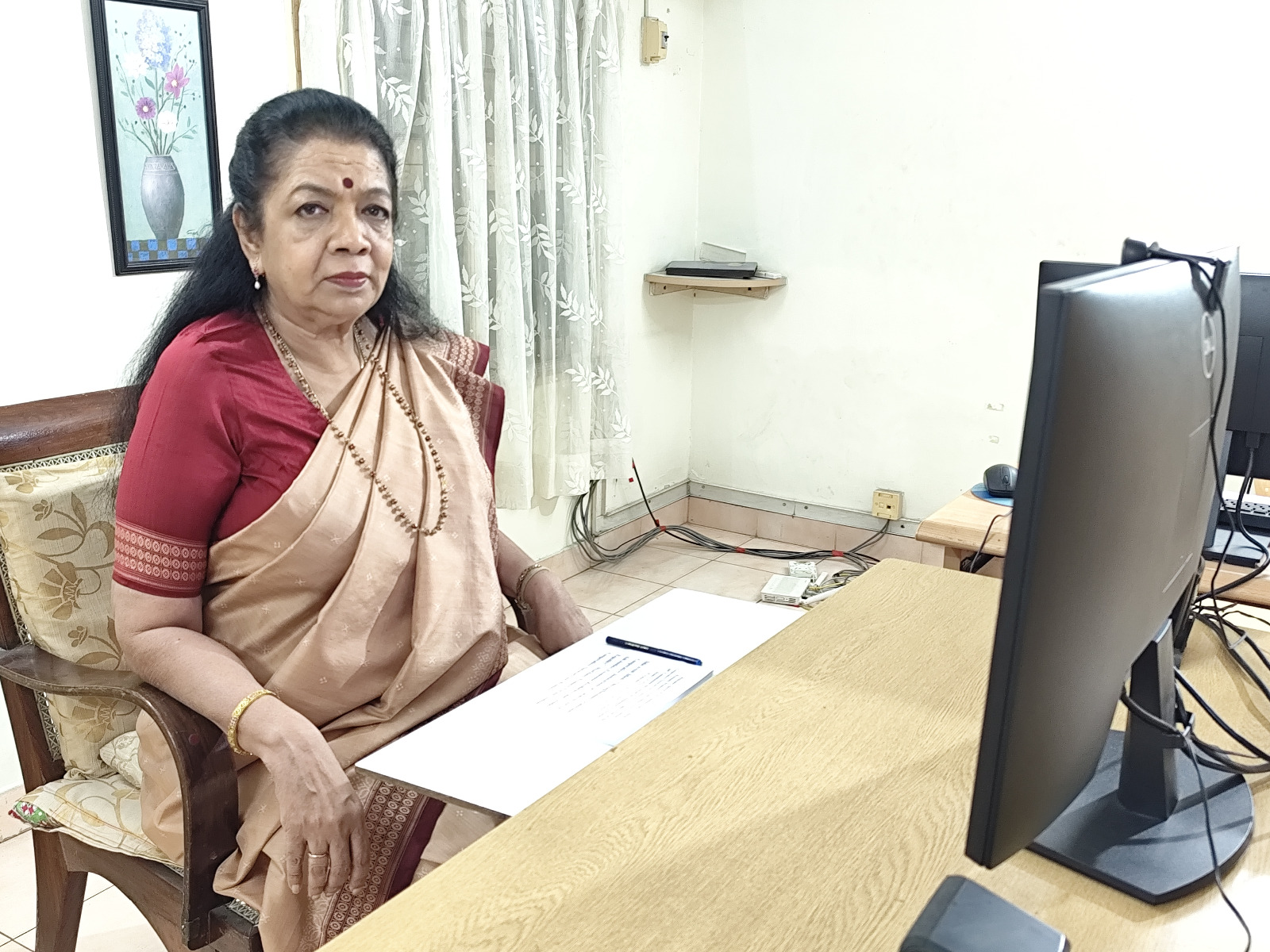
Working Women’s Forum – Indian Cooperative Network for Women (WWF-ICNW) Side event at the 64th Commission for Social Development (CSocD64) from U.N. H.Q. New York., (held in Chennai)
The UNCSOCD 64th Session of the Commission for Social Development (CSocD64) Side event on “Strengthening Grassroots Cooperative Institutions as Catalysts for Social Justice, Economic Resilience and Gender Equality”- Working Women Forum- Indian Cooperative
Network for Women
Date: 05.02.2026
Venue: WWF-ICNW, H.Q., Chennai, India
Dr. Nandini Azad, President of the Working Women’s Forum–Indian Cooperative Network for Women (WWF-ICNW), warmly welcomed all participants to this historic side event of the 64th Session of the United Nations Commission for Social Development, held for the fifth time in the historic city of Chennai, Tamil Nadu, near the southern tip of the South Asian sub-continent. Hosted by the headquarters of the Working Women’s Forum (WWF) and the Indian Cooperative Network for Women, (ICNW) HQ. This venue became a vibrant space where members, CEOs, and grassroots leaders gathered to share their story and engage with registered online participants from over 25 countries. Distinguished panellists, and more than 300 grassroots women workers watching from multiple Indian states, including Tamil Nadu, Karnataka, Andhra Pradesh, and Telangana. Highlighting the scale and reach of the movement, Dr. Azad noted that WWF-ICNW has cooperative members over 2,15,000 women across 250 trades through 13 branches in South India.
They members and President (WWF-ICNW) “Dr.Nandini Azad expressed their gratitude to the UN ECOSOC for recognizing the achievements of grassroots poor women cooperatives which today have a global influence and leadership (since the past 45 years) she said”.. Dr Azad, president WWF-ICNW “emphasized its role in ensuring that voices of women from informal sector were heard in BRICS and G20 countries On international platforms who noted that this work today spans four Southern States of India—Tamil Nadu, Karnataka, Andhra Pradesh, and Telangana— Regions and continents Reaffirming the organization’s deep grassroots presence and continued commitment to advancing the rights, dignity, and economic security of working women”.
Dr.Azad further elaborated on the organization’s growing clout and ascent to global leadership, underscoring that over its 45-year journey WWF-ICNW has emerged as a formidable presence at international policy forums, “Ensuring that the voices, concerns, and lived realities of informal sector women are articulated and acknowledged at the highest levels”. She noted the organization’s sustained engagement in global arenas at the United Nation, Brazil, Germany, the Netherlands, symbolizing its expanding international footprint and credibility. “9 times nearly in the past quarter a century they (WWF-ICNW) conducted ECOSOC side events or parallel events from Chennai HQ. A reason why poor women could interact directly i.e grassroots activists with Internationally acclaimed activists and intellectuals”.
Dr. Azad emphasized that WWF-ICNW now holds representation in both global organizations (International Raiffeisen Union- World Farmers Organization) of the international cooperative movement, from several countries. She described this as an extraordinary and unprecedented milestone, marking the first time globally that a mass women’s cooperative union of poor informal sector women has risen to become an influential and proactive global actor. Shaping discourse and action on gender equality and cooperative development.
The panel today was divided into 4 sections both live, case studies videos & stories and video. A brief status report on the WWF-ICNW’s accomplishments was given in summary (in her speech) by President WWF-ICNW, Dr.Nandini Azad.


Next IRU International Raiffeisen Union (IRU) is the world’s oldest cooperative union from Germany and DGRV, the association of German Cooperative banks was represented by IRU Secretary General, Mr. Andreas Kappes. The very committed cooperative leader in Europe and globally in his address While bringing in the flavour of European leadership in cooperatives, he was proud that IRU elected the ICNW President Dr. Nandini Azad as the first women on their global board in 50 years. Also, that he was honoured to meet Late H.S. Jaya Arunachalam former president of ICNW-WWF in Germany. Honoured WWF-ICNW was re-elected to the IRU board (second time in 100 years). He stressed that achieving such impact requires enabling legal and policy frameworks, access to finance, and sustained investment in education and training.With gender equality as a core outcome of democratic cooperatives. He reaffirmed that strengthening grassroots cooperatives is vital for social justice, economic resilience, and sustainable development. Concluding, he praised Dr. Nandini Azad, WWF, and ICNW, noting that when women organize collectively, they transform not only their own lives but entire communities and societies.
Next Mrs. Selvine Stephenson-Grant, Deputy Programme Manager for Agricultural and Agro-Industrial Development at the Caribbean community, CARICOM Secretariat, Guyana. She delivered a statement highlighting the importance of grassroots cooperative institutions as drivers of social justice, economic resilience, and gender equality. Particularly in small islands and developing regions such as the Caribbean. Referring to CARICOM’s Vision 25 by year 2025 extended to 2030, she highlighted efforts to enhance food security, regional production, and climate resilience, with women and youth as key drivers.
Concluding, she called for enabling policy environments, investments in governance, capacity building, and digital tools, she commended the Working Women’s Forum and the Indian Cooperative Network for Women, Chennai H.Q., for elevating grassroots women’s voices globally. Affirming that strengthening cooperatives is a pathway to equity, resilience, and sustainable development.
Dr Andrea Porro, Secretary General of the World Farmers Organization thank Dr. Nandini Azad and the Indian Cooperative Network for Women for Organizing this important side event. Creating space for dialog on cooperatives, social justice, and gender equality is even more meaningful here in the context of the Commission for Social Development role of the institution that operates close to people and communities. He stated that Cooperatives are built on participation, trust, and shared responsibility. When they function well, they help translate shared value into concrete action Across the world, farmers rely on organized structures to strengthen their economic position, work collectively, and make their voice heard. This side event also states that to reflect on leadership, inclusion, and the role of women in shaping the future of agriculture. Issues that are central to WFO works and closely connected to the experience of our members even especially relevant in this moment where we are migrating from the year 2025 of cooperative into the year 2026 of women farmer.
Mr Arnold Puech D’ Alissac president of the WFO states fair and well-coordinated policies are essential for social development and justice. Grassroots cooperatives play a vital role in putting these policies into action. Rooted in communities and guided by democratic principles, they bring people together, allowing collective decision-making and shared goals. Agricultural cooperatives exist worldwide, supporting food security, economic stability, and poverty reduction. While helping farmers increase income, access markets, and strengthen their role in the food system. In Europe alone, over 22,000 cooperatives involve seven million farmers and employ more than 600,000 people. He concluded thanking Nandini Azad, WWF President nominated global working group coordinator at WFO, of working group on co-operatives since 4 years now.
Ms. Ghada Ahmadein, Chair of the Regional Nile Women Network, highlighted how water stress disproportionately affects women and girls, forcing them to spend excessive time collecting water. She explained that the network was created by grassroots women to ensure Nile Basin governments and stakeholders implement gender-responsive policies. The network operates across 10 Nile Basin countries—Burundi, DR Congo, Egypt, Ethiopia, Kenya, Rwanda, South Sudan, Sudan, Tanzania, and Uganda. Despite women making up nearly 50% of the population, they are largely excluded from decision-making and development programs. Girls often miss school while fetching water, facing life-threatening risks such as attacks by predators. Ms. Ahmadein emphasized that climate change and water scarcity exacerbate these challenges for women at the grassroots level. Women-led community networks play a critical role in addressing these issues, promoting gender mainstreaming, and supporting local cooperatives. By organizing collectively, they improve access to water, enhance safety, and strengthen resilience. These networks bridge gaps between policy commitments and the realities of vulnerable communities. Supporting grassroots women’s cooperatives, she concluded, is essential for inclusive, equitable, and sustainable development in the Nile Basin.
Key Issues:
Women’s Leadership in Cooperatives,
Women play a vital role in agriculture and informal economies (both rural/urban) but there is a need to enhance and make aware their leadership opportunities in cooperatives. Often unavailable due to social and structural barriers. This side event highlights the importance of empowering women through education in cooperatives and leadership. Training.
- Capacity Building and Mentorship: WWF-ICNW provides tools, digital literacy, functional literacy training, and mentorship programs to help women take leadership roles in cooperatives.
- Global and Regional Networks: Strengthening international collaborations across Asia, Africa, Europe, and the Americas to amplify and advocate women’s voices and leadership in cooperative movements.
- Intersectionality of Challenges: Women from poor backgrounds encounter multiple challenges, including poverty, illiteracy, unemployment, and underemployment. Capacity building is a key mechanism upscale skills, knowledge, and attention.
- Empowerment through Cooperatives: Cooperatives provide women with market access, financial stability, and leadership opportunities, fostering resilience and breaking gender norms. Training for above is also vitally important.
- WWF-ICNW helps women access credit, own land, and gain financial skills apart from training/technology ensuring economic independence.
- Addressing gender-based discrimination: promoting and advocating for policy changes that ensure equal representation of women in cooperative leadership, with a focus on capacity building.
- Policy Advocacy for Gender Equity: Strengthening policies at national and international levels to ensure inclusive and sustainable cooperative movements.
- Breaking Gender Norms: The WWF-ICNW model challenges traditional gender roles by integrating women into decision-making and business leadership. Delivering effective business at the grassroot through women’s leadership. Delivering effective business at the grassroots through poor women’s leadership
- Climate Change and Gender: Recognizing the interconnection between gender issues, poverty, and climate change, the event aligns with the UN Sustainable Development Goals (SDGs) to tackle poverty, ensure food security, and promote overall well-being.
Members Participation Response
The event highlighted members in response in 5 video case studies (WWF-ICNW).
Ms. Indira Ravi, North Chennai turned ₹1,000 into a thriving Ferris wheel business, supporting her family and raising two professionals (Doctor/Lawyers)—an inspiring example of ICNW’s cooperative model empowering semi-literate women for sustainable livelihoods. Towards creating professionals from the informal sector to formal sector.
Ms. Bhuvaneshwari Santhosam from Adiramapattinam, Tamil Nadu, leveraged education and successive loans to grow a computer training centre, supporting her family, and demonstrating how women’s empowerment drives gender equality and sustainable development
Ms. Durga Devi from South Chennai transformed small loans into a thriving livelihood, gained financial confidence, and secured her daughter’s future—showing how WWFICNW empowers women through financial literacy and inclusion
Ms. Eswari from South Chennai turned small loans into a successful garland business, boosting her household income and inspiring other women, showcasing WWFICNW’s impact on financial inclusion and community empowerment.
Ms. Baki Jayalakshmi, Narasapuram, Andhra Pradesh grew a small loan into a thriving hotel business, supporting disciplined financial practices It was useful for her children’s education and demonstrating how WWFICNW empowers women’s economic independence and resilience.
The side event at the 64th session of the Commission for Social Development convenes global stakeholders—particularly women farmers, agricultural organizations, and cooperatives—to showcase exemplary models, champion gender equity, and advance the global sustainable development agenda, including economic resilience. Prioritizing gender equality and empowering women cultivators is pivotal for fostering enduring prosperity, social cohesion, and resilient rural communities worldwide.
G20 participation of WWF-ICNW was highlighted in a brief video where their representative was honoured to be the only International Civil Society Representative Dr Nandini Azad speak at the inaugural address of the G20 social summit,(Rio De Janerio, Brazil) There she highlighted the exemplary record of WWF-ICNW as mass women’s Cooperatives that built agency and empowerment of poor women. “WWF-ICNW and she requested the G20 to setup the Hunger and Poverty Commission. Include women in all aspects of Governance here; and at all levels of society. She said requesting the Brazil presidency and Lula, the Foreign Minister, the Minister for the president office, G20 representative across the globe. To help accelerate this process followed by thunderous applause. Indeed, “voices from the ground” which the travelled 20 hours by aeroplane to reach and convey the powerful message.
This was followed by Q and A Session including WWF-ICNW grassroots women members from various branches, and WWF/ICNW members/participants from all over the globe engage in a meaningful discussion. With a vote of thanks to cooperatives from the several countries, the media, the communication team, panellists, multilaterals, NGO’s, Governments, it concluded.